Songs Gone Silent: The Invisible Forces Wiping Out Your Streaming Playlists

Photo: Hanonimas, CC BY-SA 3.0, via Wikimedia Commons
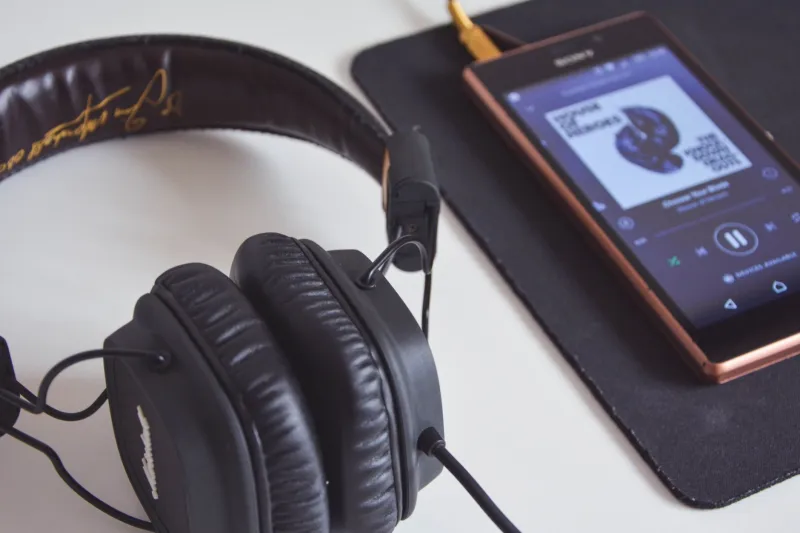
You remember the feeling. You're driving home on a Friday night, you pull up that playlist you spent three weeks perfecting — the one with the exact right flow from opener to closer — and somewhere around track seven, you hit a gray bar. Song unavailable. Then another one. Then three more. By the time you reach the end, your carefully assembled collection looks like a mouth that's been to the dentist too many times. Something pulled those teeth, and nobody told you it was happening.
This isn't a glitch. It's not your Wi-Fi. What you're experiencing is the downstream effect of a music industry that runs on contracts with expiration dates, licensing agreements that shift without warning, and a backend infrastructure that was never really designed with your listening experience as the top priority.
The Licensing Maze Nobody Wants to Explain
Here's the part streaming platforms don't exactly advertise: when you save a song to a playlist, you're not saving the song. You're saving a pointer — a reference to a licensed file that the platform has the right to stream for now. That "for now" is doing a lot of heavy lifting.
Music licensing operates on a layered system. There's the master recording license, controlled by whoever owns the actual recording — typically a label or, increasingly, the artist themselves. Then there's the publishing license, which covers the underlying composition and is managed by publishers and performance rights organizations like ASCAP, BMI, and SESAC. A streaming platform needs both to legally play a track. If either one lapses, gets disputed, or gets pulled during a renegotiation, the song disappears from the platform entirely — and every playlist it was sitting in takes the hit.
Label deals with streaming services don't run forever. They're renegotiated on cycles, and when talks break down — even temporarily — entire catalogs can vanish overnight. Remember when Taylor Swift's music famously left Spotify back in 2014? That was a public, high-profile version of something that quietly happens to smaller artists and niche catalogs all the time, with zero press coverage and zero warning to listeners.
When Artists Take Back Control
The rise of artist-owned distribution has added another layer of complexity. More musicians are pulling their masters from major labels and redistributing through independent channels, sometimes switching platforms or adjusting availability by territory in the process. A song that was licensed to Spotify through Universal might get re-released through DistroKid under different terms — and that transition period can mean weeks or months of unavailability.
For listeners, this is maddening. For the artists, it's often a necessary business move. But the person who loses in the short term is the fan who built a Sunday morning routine around a specific playlist, only to find that the anchor track is now a ghost.
The Technical Side of the Problem
Licensing isn't the only culprit. Streaming platforms deal with metadata chaos that would make your head spin. When a song gets re-uploaded, re-mastered, or re-issued — even with the exact same title and artist name — it can generate a new internal ID in a platform's database. Your playlist still points to the old ID, which may no longer exist. The result: another gray bar, another missing track.
Duplicate entries, regional availability flags, and catalog migrations between distributor systems all contribute to what engineers sometimes call "link rot" — the slow decay of a collection's integrity over time. It's the music streaming equivalent of a library where books occasionally teleport to a different branch without updating the catalog.
Platforms do have systems designed to catch some of these issues and auto-substitute tracks when a song gets re-issued under a new ID. But those systems aren't perfect, and they definitely don't account for every edge case — especially for older, more obscure recordings where metadata is inconsistent to begin with.
What Listeners Are Actually Losing
There's a human cost here that gets underplayed in conversations about tech infrastructure. Playlists aren't just queues — they're documents of taste, mood, and memory. The playlist you made for a road trip in 2019. The one that got you through a rough winter. The collaborative list you and your college roommate built together over two semesters. When tracks disappear from those collections, you lose something that can't always be reconstructed.
And unlike a physical record that sits on your shelf indefinitely, your digital library exists entirely at the pleasure of licensing agreements you had no hand in negotiating.
How to Actually Protect Your Playlists
The good news: you're not completely powerless here. A few practical moves can help you hold onto your sonic memories even when the platforms let you down.
Export your playlists regularly. Tools like Soundiiz, TuneMyMusic, and Playlist Buddy let you export your playlists across platforms or save them as files. Do this periodically — especially for playlists you really care about — so you have a record of what was in them even if tracks go missing.
Maintain a backup across multiple platforms. If you're a Spotify user, consider mirroring your most important playlists on Apple Music or Amazon Music. Licensing deals don't always expire on all platforms simultaneously, so a track that vanishes from one service might still be alive on another.
Note the artist and album, not just the playlist. When you discover a song you love, jot down the full artist name and album title somewhere outside the platform — a notes app, a spreadsheet, whatever works for you. That way, if the track disappears, you have enough information to track it down elsewhere, whether that's another streaming service, Bandcamp, or even a physical copy.
Follow artists directly. Subscribing to an artist's newsletter or following them on social media means you'll often hear about catalog changes or platform moves before they happen — or at least shortly after.
Fresh FM's Take
At Fresh FM Online, we're all about the listening experience — and a listening experience built on sand isn't one anyone should have to settle for. The streaming model has given us access to more music than any previous generation could have imagined, and that's genuinely remarkable. But access isn't the same as ownership, and the industry hasn't done nearly enough to help listeners understand that distinction.
Until platforms invest in better transparency — real-time notifications when tracks leave a playlist, clearer explanations of why content becomes unavailable, and more robust tools for preserving listener-created collections — the playlist graveyard is going to keep filling up.
Your taste is worth protecting. Don't leave it entirely in someone else's hands.