Before the Algorithm Knows Their Name: Inside America's 200-Capacity Club Pipeline
Photo: Dthomas246, CC BY-SA 4.0, via Wikimedia Commons
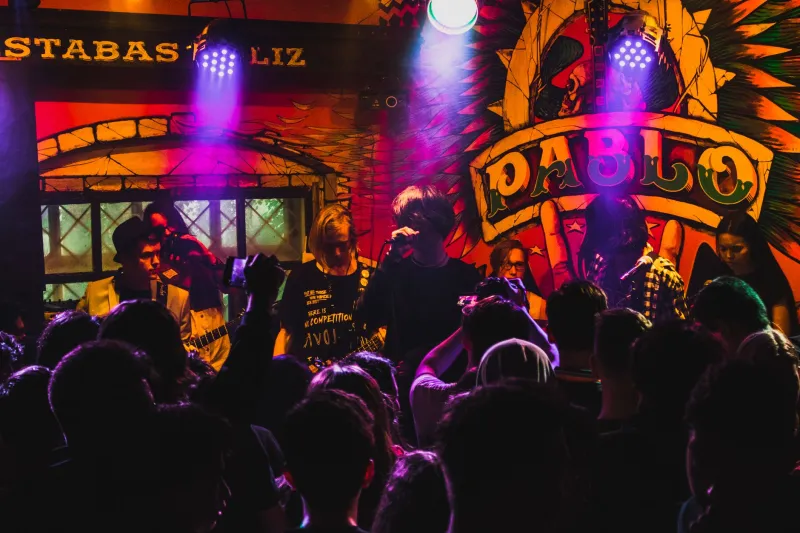
Somewhere in America tonight, in a room that holds fewer people than a Target checkout line, an artist is about to play the most important show of their career. Nobody will film it. Nobody will trend it. But someone in the crowd books talent for a bigger venue, and a scout for an indie label already flagged the set, and by next spring that artist's song will be showing up in playlists for total strangers.
This is the real A&R department of American music, and it has a sticky floor and a two-drink minimum.
The Algorithm Is a Follower, Not a Scout
Streaming discovery gets all the press, but here's the uncomfortable truth: algorithms don't discover anything. They amplify what's already moving. By the time a track hits your Discover Weekly, it's already been validated somewhere else — and very often, that somewhere is a small stage.
Talent scouts have noticed. A growing number of labels and booking agencies now treat 100-to-300-capacity rooms as their primary listening posts, sending reps to Monday-night showcases in cities like Nashville, Austin, Portland, and Philadelphia. The economics are simple: it's cheaper to catch an artist at a dive bar than to sign them after their price triples.
From the Stage to the Stream: How the Pipeline Works
The journey from small stage to streaming traction follows a remarkably consistent path:
Night one: the room. An artist plays to 40 people, 12 of whom actually watch. A booking agent for a mid-size club catches the last three songs.
Month two: the opening slot. A support gig at a 500-cap venue. The crowd didn't come for them — but a few hundred people now know the name.
Month six: the clip. Someone's phone video of a chorus lands on TikTok. Suddenly the streaming numbers that labels watch start twitching.
Year one: the algorithm catches up. Playlists, radio adds, festival undercards. To the outside world, this artist came out of nowhere.
They didn't come out of nowhere. They came out of a 200-cap club that took a chance on a Tuesday.
Why Small Rooms Make Better Talent Evaluators
There's a reason seasoned scouts trust small venues over data dashboards. A tiny room strips away the production, the marketing, the carefully engineered single. You get the artist raw: Can they hold a distracted crowd? Do they have more than two good songs? Does the room lean in or check their phone?
"Data tells you what people already like," one independent venue owner in Asheville told us. "A small room tells you what they're about to like."
Venue owners themselves have become de facto A&R figures — curating bills, pairing emerging acts, and building the kind of local scene loyalty that no platform can manufacture. Many now run their own in-house labels or livestream series, extending their taste directly onto streaming platforms.
The 2025 Case for Buying the Ticket
Here's the pitch, and we mean it: if you want the best music discovery strategy of the year, cancel nothing, keep your playlists — but buy a $15 ticket to a local show once a month.
Supporting small venues isn't charity. It's access. You'll hear the songs a year before they chart, watch careers get made in real time, and — if you're the type who loves being first — you'll always have the best answer to "have you heard of them?"
Independent venues have taken real hits over the past several years, and every closed room narrows the pipeline for the next great American band. The streaming era gave us infinite music. The small club gives us the filter that makes it mean something.
So check the listings tonight. There's a room near you with bad acoustics, cheap beer, and possibly the next big thing on stage at 9:30. The algorithm will find them eventually.
You could get there first.