Proud of the Zip Code: How Regional Music Scenes Are Building Streaming Empires Without Going National
For decades, the conventional wisdom in the American music industry was pretty simple: you start local, you go national, you make it. The ladder was clear. The direction was up and out. If you were still playing the same regional circuit five years in, something had gone wrong.
That framework is getting quietly dismantled — one zip code at a time.
Across the country, regional music scenes are not just surviving without national validation — they're thriving in ways that the traditional industry pipeline never made possible. And streaming data is telling a story that Billboard charts simply weren't built to capture.
The Atlanta Effect (And What It Actually Teaches Us)
Everyone knows Atlanta as a hip-hop powerhouse. But the more interesting story isn't the city's biggest exports — it's what's happening in the scenes that didn't go mainstream. The trap subgenres that branched off in specific Atlanta suburbs, the DIY rap collectives that built regional followings without ever chasing a major label deal, the producers who became local legends before anyone outside Georgia paid attention.
What those scenes figured out — sometimes by accident, sometimes by design — is that regional identity creates a loyalty that national appeal can't manufacture. When a song sounds like it came from a specific place, the people from that place feel genuinely claimed by it. They're not just fans. They're representatives.
That emotional ownership translates directly into streaming behavior. Local listeners save songs, add them to personal playlists, share them with friends in the same community. The engagement metrics look different from a viral hit — slower, steadier, and significantly more durable.
Austin Isn't Just Country Anymore
The "Live Music Capital of the World" branding has always been tied to a certain image of Austin — guitars, boots, a slightly worn-in honky-tonk vibe. But the city's actual music scene in 2024 is considerably stranger and more interesting than that postcard.
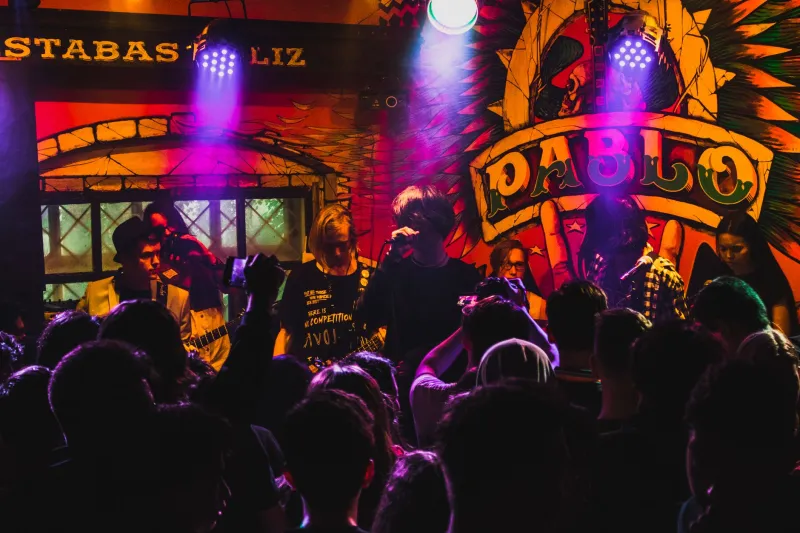
An indie rock and experimental underground has been building in Austin for years, largely invisible to national tastemakers but deeply wired into the city's creative community. Local venues, college radio stations, and a tight network of producers and collaborators have created an ecosystem where artists can sustain real careers without ever needing a cosign from a New York or LA publication.
Artist collective member Sofia Reyes, who plays in two Austin-based indie projects, describes the scene's relationship with national attention as almost deliberately arms-length. "We're not anti-success. We just don't define it the way the industry does. If we're filling the rooms we want to fill and our music is connecting with people who actually get it, that's not a consolation prize. That's the goal."
Her band's streaming numbers bear that out — consistent monthly listeners concentrated heavily in Texas, with pockets of dedicated fans in cities with similar DIY scenes like Chicago and Philadelphia. Not viral. Not national. But genuinely sustainable.
Portland's Weird-on-Purpose Strategy
Then there's Portland, which has spent years cultivating a reputation for experimental and noise-adjacent music that actively resists mainstream palatability. That's not a bug — it's the entire point.
The Portland experimental scene understands something important: niche audiences stream obsessively. A listener who is deeply into a specific kind of avant-garde electronic music will play those tracks on repeat, seek out everything an artist has ever released, and evangelize to other listeners in the same niche. The per-capita engagement from a small, dedicated audience often outperforms the casual consumption patterns of a much larger general audience.
Local radio has played a role here too. Community and college stations in cities like Portland, Austin, and smaller markets across the country have maintained a commitment to local programming that commercial radio largely abandoned. Those stations function as discovery infrastructure — not for the whole country, but for the community that actually lives there. And increasingly, what gets played on a local station in Portland ends up in the streaming libraries of people who've never set foot in the Pacific Northwest.
Geography as Brand Identity
What the most successful regional scenes share is a willingness to treat their location as a feature rather than a limitation. The sound, the references, the visual aesthetic, the community networks — all of it is rooted in a specific place. That specificity is what makes it feel real.
For listeners who are exhausted by music that sounds like it was designed in a lab to appeal to everyone everywhere, a song that clearly comes from somewhere is a genuine relief. It's not trying to be everything. It's trying to be true to something specific. That authenticity is increasingly rare, and audiences can feel the difference.
This has practical implications for how regional artists approach streaming strategy too. Rather than trying to optimize for algorithmic discovery on a national level, many are investing in community-first tactics — local show announcements that drive streaming, collaborations with other artists in the same scene, and direct communication with fans who are geographically concentrated enough to actually mobilize.
The Streaming Platform's Regional Blind Spot
Here's the honest critique: most major streaming platforms are still largely set up to reward national and global reach. The editorial infrastructure — the playlists, the algorithmic amplification, the promotional tools — skews heavily toward acts that can scale across markets.
Regional artists often fall through those cracks, even when their local engagement numbers are impressive by any reasonable measure. A band with 80,000 monthly listeners concentrated almost entirely in one metro area looks different in a platform dashboard than an artist with the same numbers spread across 40 states — even if the former represents a far more passionate and active fanbase.
That's a gap the industry hasn't fully reckoned with. And it's one that independent platforms, community radio, and local curation networks are quietly filling.
The Sound of Where You're From
What's happening in regional music right now is, in its own way, a correction. For years, the pressure to go national pushed artists to sand down the edges that made them specific — to make music that could play anywhere, which often meant music that felt like nowhere.
The scenes that are thriving in 2024 made a different bet. They stayed rooted. They built deep rather than wide. And streaming, whatever its limitations, has given them a tool to reach the listeners who are looking for exactly what they're offering — music that sounds like it actually comes from somewhere real.
That's a fresh sound. And it's coming from your own backyard.