Drop It Like It's Strategic: Why Artists Are Ditching Label Timelines and Winning on Their Own Clock
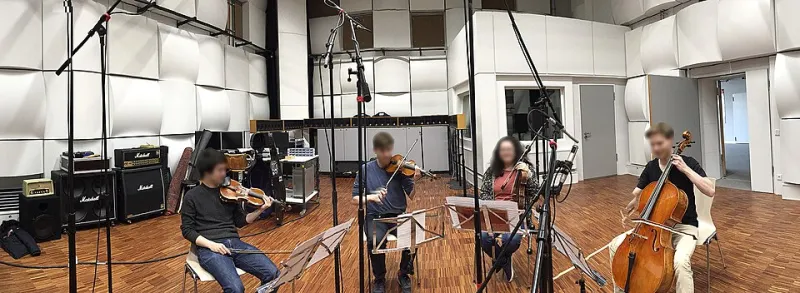
Photo: musicians: anonymous recording: Dieter Leckschat, CC BY-SA 4.0, via Wikimedia Commons
For decades, the music industry ran on a pretty predictable clock. Album announcement. Lead single. Press cycle. Tour. Repeat in two to three years if your label still believed in you. It was a machine — efficient, maybe, but not exactly built with the artist in mind. And for a long time, most musicians had no real choice but to feed it.
That's changing fast.
Across the country — from Atlanta trap houses to indie studios in Portland — artists are quietly dismantling that old model and replacing it with something a lot more personal, and a lot more effective. They're releasing music when they feel like it. They're building anticipation through fan communities instead of press releases. And in a streaming landscape where a new song drops every thirty seconds, their calculated patience is cutting right through the noise.
The Problem With the Old Playbook
The traditional label release cycle made sense in a physical media world. You needed time to manufacture records, ship them to stores, book radio promotion, and coordinate magazine covers with a release date that was already locked in six months prior. There was a logic to it, even if artists often felt like passengers on their own career train.
But streaming broke that logic wide open. There are no shelves to stock. No pressing plants to schedule. A song can go from a voice memo to 10 million ears in a matter of weeks — sometimes days — if the moment is right. The infrastructure that once justified those rigid timelines just doesn't exist in the same way anymore.
Yet a lot of labels kept running the old play anyway. Quarterly rollouts. Mandated single gaps. Marketing campaigns that prioritized algorithmic placement over genuine fan connection. Artists — especially newer ones — found themselves releasing music not when it felt right, but when the spreadsheet said so.
Unsurprisingly, listeners started to feel it. Forced rollouts often land with a thud, no matter how much money gets thrown at them.
The Surprise Drop Effect
Remember when Beyoncé dropped her self-titled album at midnight in 2013 with zero advance notice? At the time, it felt like a stunt. In hindsight, it was a blueprint.
The surprise release — done right — creates a cultural moment that no amount of pre-release marketing can replicate. It treats fans like insiders rather than targets. It generates genuine word-of-mouth because people are actually surprised, not just performing surprise after a three-month hype cycle.
Independent artists have picked up on this energy in a huge way. Rather than teasing a song for weeks across every social platform, some artists are simply... dropping it. A quick post, a direct link, maybe a voice note explaining where the song came from. That's it. And for artists who've already built a loyal listener base — the kind of fans who actually have notifications turned on — that's more than enough.
The key, though, is that the surprise only works when there's already trust between the artist and the audience. You can't ghost your fanbase for two years and then expect people to lose their minds over a midnight drop. The surprise has to feel like a gift, not a reappearance.
Spacing It Out: The Long Game That's Paying Off
On the flip side of the surprise drop is another increasingly popular strategy: deliberate, unhurried spacing between releases. Instead of flooding streaming platforms with content to stay algorithmically relevant, some artists are making listeners wait — and using that waiting period to deepen the relationship.
This approach leans heavily on community. Think Discord servers, Patreon exclusives, live-streamed writing sessions, and newsletter updates that feel like messages from a friend rather than a press kit. Artists who've mastered this aren't just selling music — they're selling access, process, and personality. By the time a new track actually drops, fans aren't just ready for it. They feel like they helped build it.
Singer-songwriter communities in particular have embraced this rhythm. Without a label's release quota to hit, independent acts can take the time to actually finish something before sharing it — a concept that sounds obvious but gets crushed under the weight of content-machine pressures.
The payoff? Streams that hold. Playlists that stick. Fans who evangelize without being asked.
Major Labels Are Starting to Pay Attention
Here's where it gets interesting: even artists with major-label deals are starting to push back on the old schedule. Some are negotiating for more creative control over timing. Others are using social platforms to create their own hype cycles that run parallel to — or sometimes completely independent of — their official label campaigns.
A few bigger names have even used the threat of going independent as leverage to get more flexibility in their contracts. The calculation has shifted. Labels used to hold all the cards because they controlled distribution and promotion. Streaming platforms democratized the first part, and social media is rapidly democratizing the second.
When an artist with 800,000 monthly listeners on a streaming platform also has 600,000 TikTok followers and a dedicated Reddit community, they don't need a label's promotional machine the same way their predecessors did. That changes the negotiation entirely.
What This Means for Listeners
For fans, this shift is mostly great news — even if it occasionally means waiting longer between drops from your favorite artist. What you lose in volume, you tend to gain in quality and authenticity. Music released on the artist's own terms often sounds like it. There's a confidence and completeness to it that rushed, label-mandated releases frequently lack.
It also means that streaming platforms are starting to see a different kind of engagement around these unconventional rollouts. Listeners who are emotionally invested in an artist's journey — who followed the process, who felt the anticipation — tend to replay tracks more, share them more, and stick around longer. That's the kind of listening behavior that builds real careers, not just viral moments.
Here at Fresh FM Online, we play music that earns its place in the rotation — not because a release schedule demanded it, but because it genuinely connects. And increasingly, the artists making that kind of music are the ones who threw out the old rulebook and started writing their own.
The New Definition of a Release
Maybe the biggest shift happening right now is in how artists — and listeners — are redefining what a "release" even means. It doesn't have to be a 12-track album with a physical component and a stadium tour attached. It can be a single shared in a newsletter. A two-song EP dropped on a Tuesday because the vibe was right. A live version posted to SoundCloud because the studio cut never quite captured it.
The artists winning in this environment aren't necessarily the loudest or the most prolific. They're the most intentional. They know their audience, they respect their audience's time and attention, and they release music in a way that feels like a genuine exchange rather than a content delivery transaction.
In a streaming world that often feels like a firehose, that kind of patience — that kind of trust — hits different. And honestly? It sounds a whole lot fresher.